Ebook The Balanced Scorecard: Translating Strategy into Action, by Robert S. Kaplan David P. Norton
knowing more concerning this book, you can reveal how this publication is necessary for you to read. This is among the reasons you should review it. Nevertheless, today The Balanced Scorecard: Translating Strategy Into Action, By Robert S. Kaplan David P. Norton can be suggested to get rid of the troubles that you encounter currently, probably. Even you have the best choice, obtaining info as well as factors to consider from some other resources are necessity. You could have a lot more times to understand about the problems and also the best ways to address it. When you require entertainment making enjoyable, you could get some from this publication.
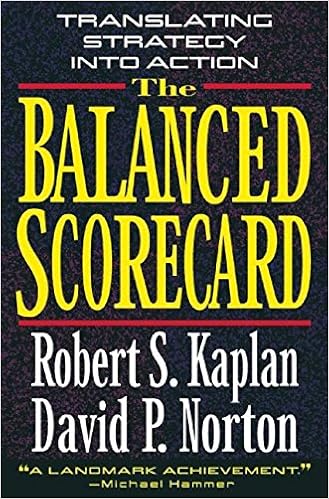
The Balanced Scorecard: Translating Strategy into Action, by Robert S. Kaplan David P. Norton

Ebook The Balanced Scorecard: Translating Strategy into Action, by Robert S. Kaplan David P. Norton
Come join us to discover the remarkable reading book from worldwide! When you feel so challenging to locate many books from various other nations, it will certainly not be right here. In this website, we have billion titles of guides from this country as well as abroad. And also one to keep in mind, you will certainly never ever run out of this publication, as in the book shop. Why? We offer the soft data of those books to obtain easily by all viewers.
When a needed of checking out grows higher, it's the moment to select the new book, when the very best book worldwide for any age is supplied, you could take it immediately. It will not should wait for long period of time once more. Getting this publication quicker after reading this passage is really wise. You can see just how the The Balanced Scorecard: Translating Strategy Into Action, By Robert S. Kaplan David P. Norton actually has the hundreds fans.
This publication will reveal you the current publication that can be gotten in some places. However, the motivating book will be far more created. But this The Balanced Scorecard: Translating Strategy Into Action, By Robert S. Kaplan David P. Norton, it will reveal you recent point that you want to know. Reading publication as one of the tasks in your holidays is really smart. Not everybody will have happy to do it. So, when you are person that love this publication to review, you need to enjoy the moment analysis as well as finishing this book.
It is not absorb when you have to do something with your necessity. If you really require resources and also motivations related to this motivating topic, you can do it. It can be done by you ahead with us and find the link. While The Balanced Scorecard: Translating Strategy Into Action, By Robert S. Kaplan David P. Norton makes you feel interested, it will complete the inquisitiveness as well as finish it up after completing analysis this publication.
Product details
Hardcover: 336 pages
Publisher: Harvard Business Review Press; 1 edition (September 1, 1996)
Language: English
ISBN-10: 9780875846514
ISBN-13: 978-0875846514
ASIN: 0875846513
Product Dimensions:
6.8 x 1.2 x 9.8 inches
Shipping Weight: 1.5 pounds (View shipping rates and policies)
Average Customer Review:
4.3 out of 5 stars
81 customer reviews
Amazon Best Sellers Rank:
#84,623 in Books (See Top 100 in Books)
As the title indicates, this book introduces the concept of the Balanced Scorecard: "The Balanced Scorecard (BSC) provides managers with the instrumentation they need to navigate to future competitive success. Today, organizations are competing in complex environments so that an accurate understanding of their goals and the methods for attaining those goals is vital. The Balanced Scorecard translates an organization's mission and strategy into a comprehensive set of performance measures that provides the framework for a strategic measurement and management systems. The Balanced Scorecard retains an emphasis on achieving financial objectives, but also includes the performance drivers of these financial objectives. The scorecard measures organizational performance across four balanced perspectives: financial, customers, internal business processes, and learning and growth. The BSC enables companies to track financial results while simultaneously monitoring progress in building the capabilities and acquiring the intangible assets they need for future growth."The authors then go on to presenting each of the four perspectives in details and discuss how the Balanced Scorecard measures link to the strategy. In the subsequent section, the authors focus on how the Scorecard is used to manage business strategy. The framework presented revives the traditional thinking around strategy and how it is implemented in a very pragmatic manner - balancing both strategy and its associated execution. What I particularly enjoyed are the numerous case studies and examples presented that help anchor the concepts.A classic must read in the area of Corporate Strategy!Below are key excerpts from the book that I found particularly insightful:1- "The Balanced Scorecard emphasizes that financial and nonfinancial measures must be part of the information system for employees at all levels of the organization."2- "As more and more companies work with the Balance Scorecard, they see how it can be used to:-clarify and gain consensus about strategy,-communicate strategy throughout the organization,-align departmental and personal goalts to the strategy,-link strategic objectives to long-term targets and annual budgets,-identify and align strategic initiatives,-perform periodic and systematic strategic review, and obtain feedback to learn about and improve strategy."3- "A strategy is a set of hypotheses about cause and effect. The measurement system should make the relationships (hypotheses) among objectives (and measures) in the various perspectives explicit that they can be managed and validated."4- "The financial objectives serve as the focus for the objectives and measures in all the other scorecard perspectives. Every measure selected should be part of a link of cause-and-effect relationships that culminate in improving financial performance."5- "The scorecard should tell the story of the strategy, starting with the long-run financial objectives, linking these to the sequence of actions that must be taken with financial processes, customers, internal processes, and finally employees and systems to deliver long-term economic performance."6- "In the internal-business process perspective, managers identify the critical processes at which they must excel if they are to meet the objectives of shareholders and of targeted customer segments...One recent development has been to incorporate the innovation process as a vital component of the internal-business-process perspective."7- "While not the same as measurement, and not a long-term substitute for measurement, the text is a marker that serves many of the same objectives as a formal measurement system."8- "Balanced Scorecard of no more than two dozen measures can be sufficient for measuring their operations. They are, of course, correct in a narrow sense, but they fail to distinguish between diagnostic measures - those measures that monitor whether the business remains in control and can signal when unusual events are occurring that require immediate attention - and strategic measures - those that define a strategy designed for competitive excellence."9- "The Balanced Scorecard is not a replacement for an organization's day-to-day measurement system. The scorecard measures are chosen to drive the attention of managers and employees to those factors expected to lead to competitive breakthroughs for an organization."10- "The disconnect between strategy formulation and strategy implementation is caused by barriers erected by traditional management systems - the systems organizations use to:-establish and communicate strategy and directions;-allocate resources;-define departmental, team, and individual goals and directions; and-provide feedback."11- "The scorecard provides a common framework for organizing the planning process of corporate support departments. It enables these departments to understand the strategies of the entire corporation and the individual SBUs so that the support departments can develop and deliver better services that help the operating units and corporation achieve their strategic objectives."12- "Strategic planning and operational budgeting processes are too important to be treated as independent processes. Strategic planning must be linked to operational budgeting if action is to be tied to vision."13- "Mintzberg and Simons identify key aspects of this newer or emergent view of strategy:-Strategies are incremental and emerge over time-Intended strategies can be superseded-Strategy formulation and implementation are intertwined-Strategic ideas can arise throughout the organization-A strategy is a process"14- "...the measurement framework in the Balanced Scorecard should be deployed to develop a new management system. The distinction between a measurement and a management system is subtle but crucial. The measurement system should be only a means to achieve an even more important goal - a strategic management system that helps executives implement and gain feedback about their strategy."15- "Most companies introduce the scorecard to drive single pieces of the management process: Obtain clarity and consensus about strategy, achieve focus, leadership development, strategic intervention, educate the organization, set strategic targets, align programs and investments, build a feedback system."
Many organizations are in the process of implementing the `Balanced Scorecard', yet some are struggling. Either they fail to implement the measures, or the measures fail to have the expected impact.Organizations execute four 'mission critical' activities, for a scorecard to succeed. Each is more difficult than might appear and must be performed by a different part of the organization.1. Articulating the strategy: Top management must articulate and disseminate the strategy. More than measuring success, a performance system communicates a strategy. Without a strategy, the performance measures become an `anything goes' exercise. `Anything goes in theory' means that `everything stays in practice'.2. Designing the measures: A core task team must design the measures to avoid uneconomic behavior. Poorly thought out measures create counter productive activity.3. Operationalizing the measures: Once measures are defined, programmers operationalize and automate them.Even revenue can be complicated in practice: When is it recorded, and what does it include. The task team may well find themselves getting what they asked for, and not what they wanted.4. Getting the buy-in: Change management skills are needed to align the changes and create buy in. Dilbert cynically states that there are two steps to a great performance measurement system. 1) Gather information and 2) ignore it. For performance measurement to work, the system must be accepted, understood, and aligned to the reward.The book, `The Balanced Scorecard' by Kaplan and Norton has become compulsory reading for middle management. It is very good, with the one weakness that it makes performance measurement look deceptively simple.
The Balanced Scorecard looks at the important issues of alignment, coordination, and effective implementation. Most business thinkers like to start with the big picture, and end there. As a result, most ideas for going in a new direction are quickly diluted by misunderstanding, falling back on old habits, and lethargy. Since Peter Drucker first popularized the idea of business strategy, there have been vastly more strategies conceived than there have been strategies successfully implemented as a result. Much attention has been paid to devising better strategies in the last four decades, and little to implementing strategies. The big pay-off is in the implementation, and The Balanced Scorecard is one of handful of books that provide important and valuable guidance to explain what needs to be done to successfully execute strategy. You must have more measures, and different measures than the accounting system provides. You also need to link measures and compensation to the key tasks that each person must perform. This book is simply the Rosetta Stone of communicating and managing strategy. The Balanced Scorecard is the beginning of the practical period of maturity in the field of business strategy. Read this book today to enjoy much more prosperity! I also recommend that you read The Fifth Discipline, The Fifth Discipline Handbook, and The Dance of Change to understand more about the context in which you are trying to make positive change. These four books are excellent companions for each other.
Kaplan and Norton team never disappoints. For someone like me who has never been exposed to Balance Scorecard, this provides a step-by-step guide to this strategy implementation tool.
Once I received the kindle edition, I realize that the book doesn't come with the hard copy original images.Very disappointed.
Boring!
This book does not deliver on the expectations built by the initial Balanced Scorecard articles. It does very little to clarify and structure the concept and approach to building a Balanced Scorecard. There are a few interesting ideas but they get lost in a repetitive and hard to read text.
The Balanced Scorecard: Translating Strategy into Action, by Robert S. Kaplan David P. Norton PDF
The Balanced Scorecard: Translating Strategy into Action, by Robert S. Kaplan David P. Norton EPub
The Balanced Scorecard: Translating Strategy into Action, by Robert S. Kaplan David P. Norton Doc
The Balanced Scorecard: Translating Strategy into Action, by Robert S. Kaplan David P. Norton iBooks
The Balanced Scorecard: Translating Strategy into Action, by Robert S. Kaplan David P. Norton rtf
The Balanced Scorecard: Translating Strategy into Action, by Robert S. Kaplan David P. Norton Mobipocket
The Balanced Scorecard: Translating Strategy into Action, by Robert S. Kaplan David P. Norton Kindle